







The Boathouse Group has opened 5 new venues in the last 2 years running me&u and Lightspeed
0 min
80%+
5
At a glance
We sat down with Sam Cousens, Head of Projects and Facilities, The Boathouse Group
Sam started as a barista at Balmoral while studying at uni. Eleven years later, he's the person responsible for opening new venues, five in the last two years alone. He knows what operational friction looks and feels like at every level of the business.
The venue

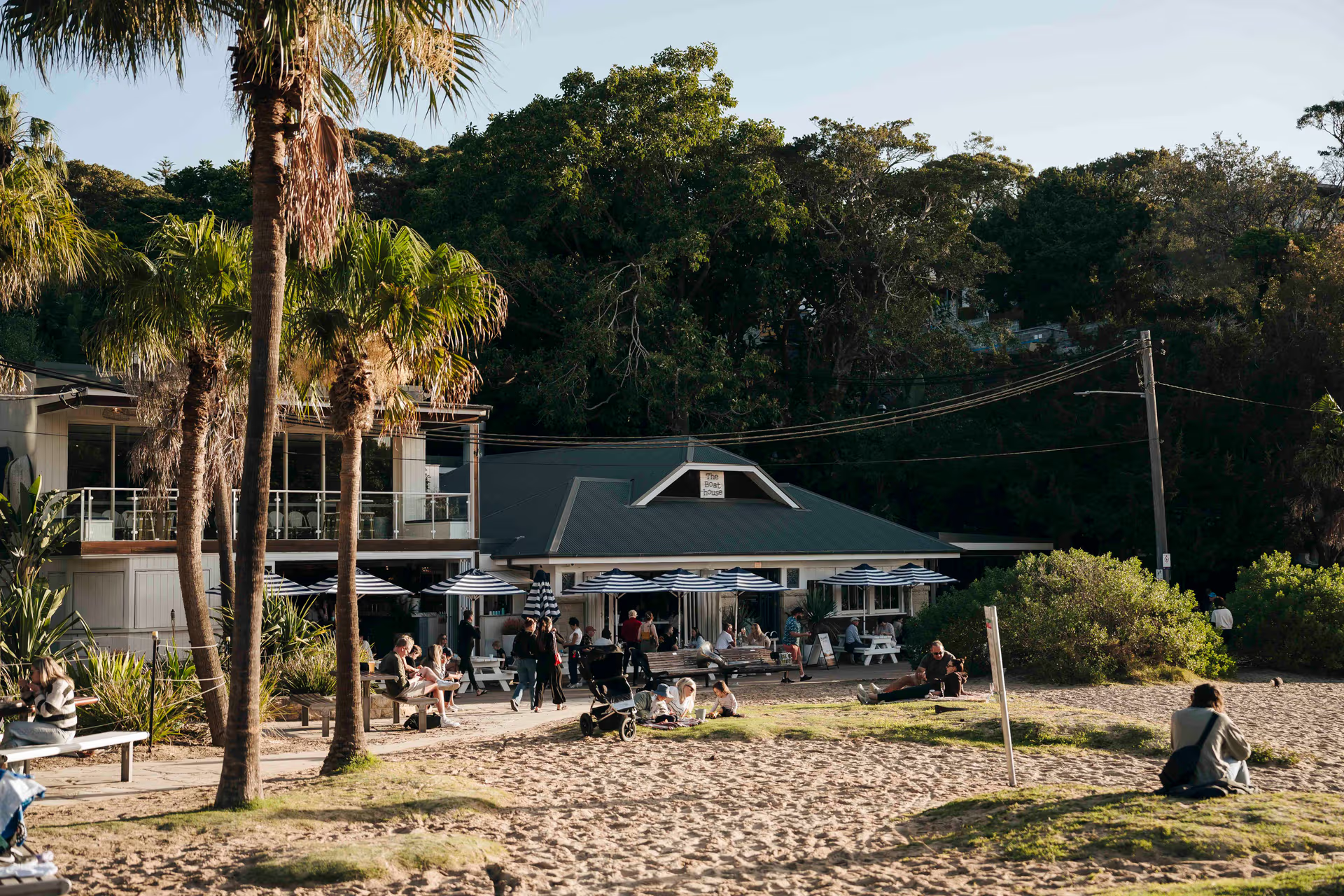
Shelly Beach in Manly is the kind of place that sells itself. It sits at the end of the Shelly to Manly coastal walk, the last stop before the headland, which means everyone ends up there eventually. Locals come for breakfast. Tourists come for the picturesque views, and local swimming group, 'The Bold and the Beautiful', turn up every single morning, rain or swell, and they never leave without a coffee.
It's an iconic venue. But iconic doesn't mean easy to run.
The problem
For years, ordering at Boathouse venues meant joining a queue.
Not a short one. The entire front section of Shelly Beach, the space guests now sit and eat in, used to be dedicated to a single purpose: holding the line. On a busy Sunday, a guest might wait 45 minutes just to place their order.
"Ordering through Boathouse venues used to be a major hurdle to overcome," says Sam. "This whole space we're sitting in used to be a line-up point. There was a main till, and a queue would form through here and out the door."
Beyond the guest experience, the operational cost was real. Staff time was tied up managing the queue and the till. End-of-day reconciliation was a manual, 30-minute exercise. When a special sold out mid-service, there was no automatic cutoff, guests could order something that no longer existed and staff had to break the news.
"There's nothing worse than telling a guest something is unavailable after ordering," Sam says. "It takes time away from providing service and improving the guest experience."
The turning point
Sam had always been open to technology. But in his experience, before me&u and Lightspeed, the promise of tech rarely matched the operational reality, especially when it had to work across a multi-venue group with different service styles, different kitchen setups, and staff who needed to actually use it.
"I've always embraced tech. It was never optimised to the point that it is now. The advantage we gained used to be minimal, and if people didn't buy into it, it was hard to optimise."
What changed the calculation was the integration between me&u and Lightspeed and how that matched operational expectations. Instead of two systems running in parallel and creating more data to reconcile, everything flowed through one connected stack.
"You'd be crazy not to adopt it. Everything flows, menu, stock, modifiers, pricing, promotions. I couldn't go back."
How it works now
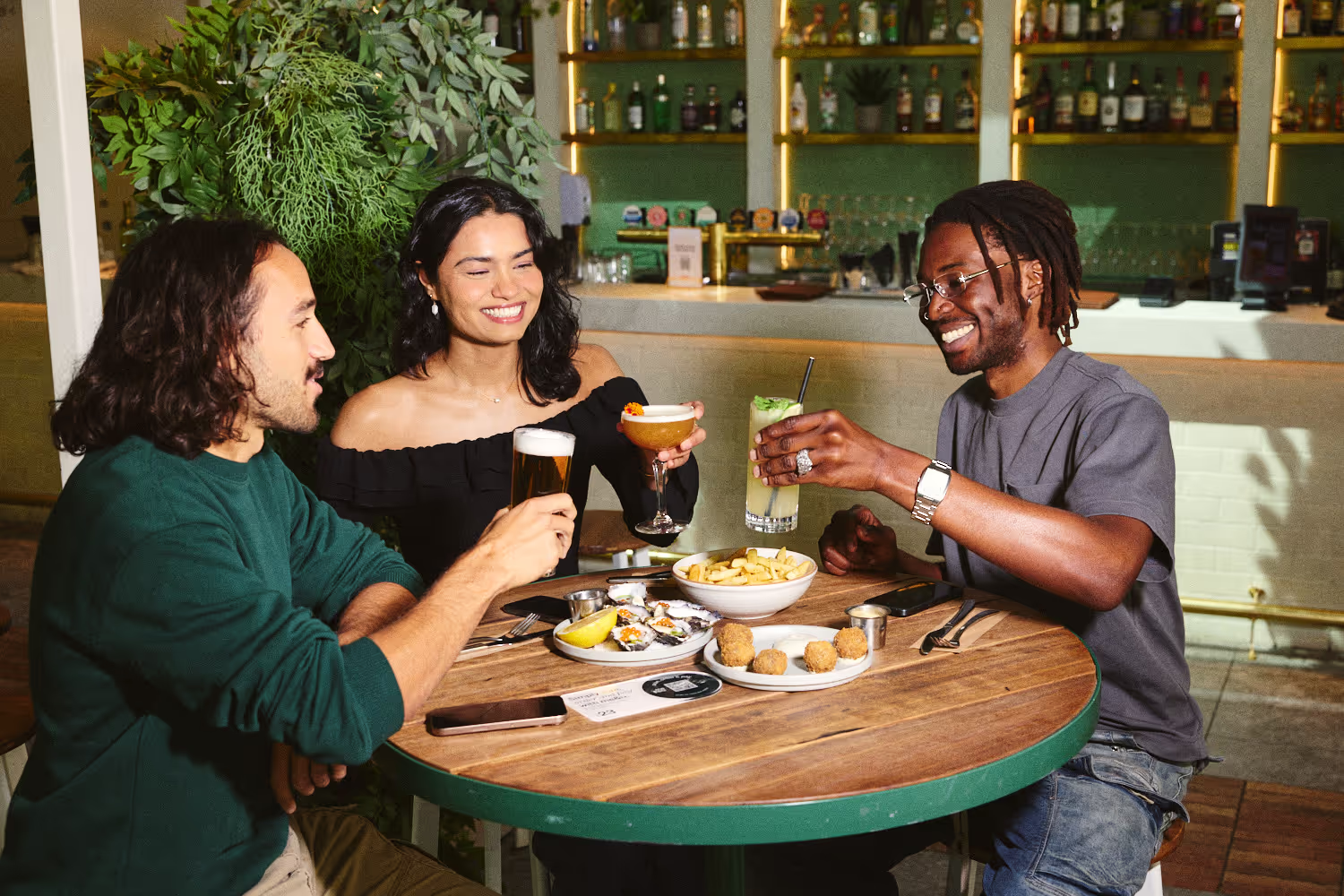
Shelly Beach runs a hybrid service model built around QR ordering. Different sections of the venue operate differently, some table service, some self-order, giving guests control without removing the hospitality feel.
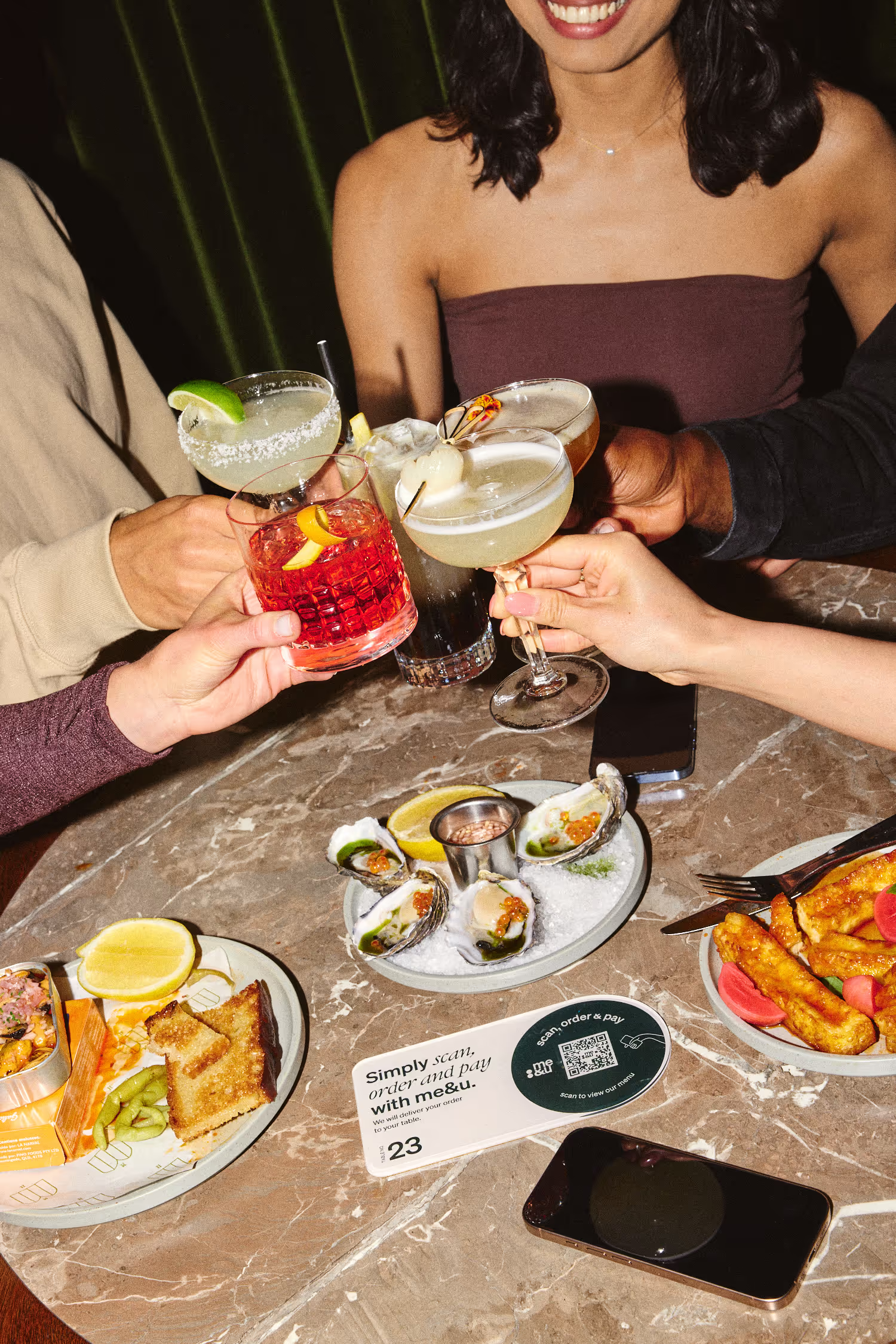
The visual menu has become one of the most talked-about features. At a venue that draws tourists and food-driven locals, showing guests what they're ordering matters.
"The visual menu is fantastic. People love seeing what they're ordering. People eat with their eyes, especially in today's social media-driven world."
Add-ons and modifiers have driven meaningful incremental revenue, something the data confirms. Shelly Beach holds an average order value of $41–45, with consistent performance across seasons, reflecting that guests are regularly spending more than the base menu price once they see what's available.
On the operations side, the Lightspeed integration has transformed how the group plans and manages the business. Real-time sales data feeds into rostering software. Stock decisions are made from purchase trends and food cost data, not instinct. Out-of-stock items are automatically cut from the menu mid-service, eliminating the awkward conversation with a guest who's already ordered.
End-of-day reconciliation, once a 30-minute manual task, now takes under five minutes.
"You don't make decisions without data," Sam says. "Otherwise, you're just shooting in the dark."
The numbers
- 45 min → instant: wait to place an order on peak days
- 30 min → under 5 min: daily reconciliation time
- ~$1.75M value of orders processed through me&u at Shelly Beach in the past 12 months
- 5 new venues opened in the last two years under Sam's leadership, each built on the me&u and Lightspeed stack
Advice you can steal
- Remove the friction before you redesign the experience. The queue wasn't a quirk, it was a structural problem. Solving it unlocked everything else.
- Don't run a tech stack you can't see into. If your POS and ordering systems don't talk to each other, you're doing double the work for half the insight.
- Let the data decide the menu, not your gut. Purchasing trends, food costs, profitability by item, this is how you protect margin as costs rise.
- Treat add-ons as a service, not a sales tactic. Guests who can see the full menu and customise their order spend more and feel better about it.